Patents Reveal Tesla's Tiny Wipers and Washers for Camera Lenses
Tesla may have finally found a solution to the problems associated with its vision-only system. A new patent reveals camera units equipped with tiny wipers and water sprayers. Prototypes of the Cybercab have been spotted carrying camera-cleaning hardware.
Many automakers pursuing autonomy have settled on a similar hardware recipe: cameras, radar, and LiDAR, each compensating for the others' weaknesses. Tesla took a different path. Its driver-assist suite relies entirely on cameras, without radar or LiDAR. While a vision-only system offers some advantages, it also brings drawbacks, such as issues caused by dirty camera lenses.
Tesla is aware of the problem. Recent Cybercab prototypes have been spotted with small washer jets aimed at the exterior cameras, spraying them clean when needed. A patent filing suggests the company wants to go beyond a simple squirt of fluid.
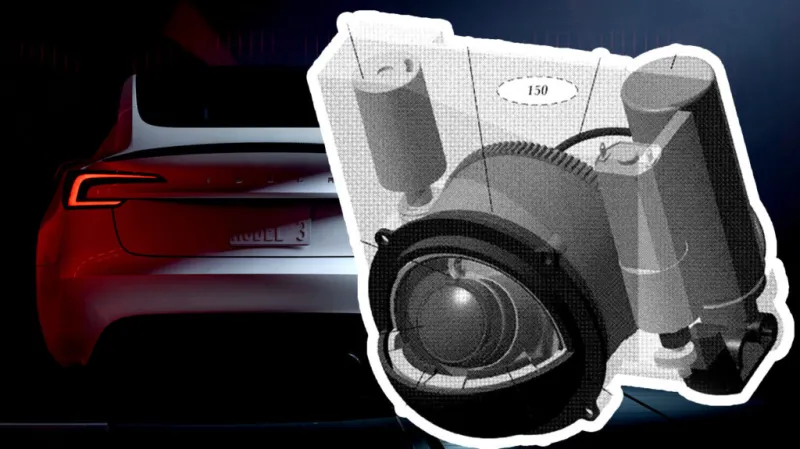
An image from the patent depicts the entire camera unit, including a tiny fluid reservoir that can spray water onto the camera's lens. Tesla has also designed a tiny wiper blade that can sweep across the lens, ensuring it is as clean as possible. This blade will be driven by a small wiper motor, also integrated into the camera's housing.
This innovative solution could help overcome some of the issues Tesla's vision system experiences. However, a setup like this will not assist Tesla's cameras in dealing with sun glare, for example, which can impact how the automated driving systems function.
It is also unclear whether all exterior cameras used by current Tesla models could be fitted with these units, as they are noticeably larger than a standard camera. At the very least, Tesla may be able to integrate such camera units into the front of its vehicles, as well as the front quarter panels and the rear, among the most important cameras for capturing 360-degree images.
Of course, these camera units will be more expensive than those currently used and, with more moving parts, will also be more prone to failure. However, as Tesla seeks to achieve full autonomy, they may become necessary.